
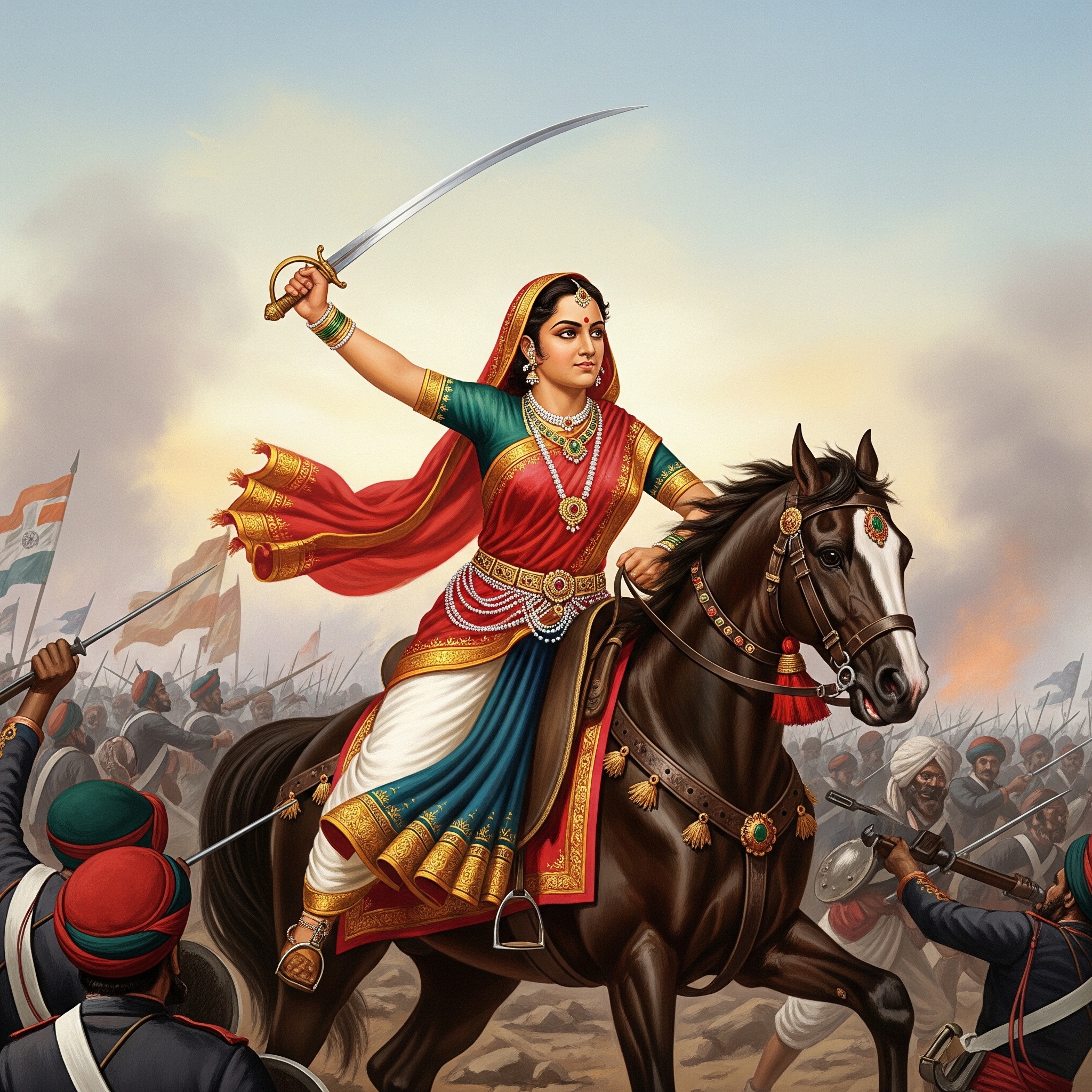
Rani Lakshmibai: The Fearless Queen of Jhansi and Her Story of Courage
Introduction
Rani Lakshmibai, also known as the Queen of Jhansi, is one of the most inspiring figures in Indian history. Her bravery, intelligence, and leadership during the First War of Indian Independence in 1857 made her a symbol of courage for generations. Born as a regular girl, she went on to become one of the greatest warriors India has ever known. This blog is a detailed account of her life, from her childhood to her heroic stand against British rule—perfect for students and young learners who want to know more about India’s fearless queen.
Childhood and Early Life
Rani Lakshmibai was born on November 19, 1828, in Varanasi (then Banaras) as Manikarnika Tambe. She was affectionately called “Manu” by her family. Her father, Moropant Tambe, worked for the Peshwa of Bithoor, and her mother, Bhagirathi, died when Manu was very young. Raised in the Peshwa’s court, she received an education that was quite unusual for girls in those times.
Manu was trained in horse riding, sword fighting, archery, and self-defense. She also read books and learned about politics, history, and religion. Her fearless nature and adventurous spirit were visible even during her childhood. These qualities later helped her become a strong and determined leader.
Marriage and Becoming the Queen of Jhansi
At the age of 14, Manikarnika was married to Maharaja Gangadhar Rao, the King of Jhansi. After marriage, she was given the name Lakshmibai. She adapted to royal life but remained dedicated to her physical training and education.
Tragically, their only son died at a young age. To ensure a successor for the throne, they adopted a boy named Damodar Rao. However, after the death of her husband in 1853, the British East India Company refused to recognize the adopted child as the heir to the throne. Under the Doctrine of Lapse, the British tried to annex Jhansi.
The Uprising of 1857
When the revolt against British rule broke out in 1857, Rani Lakshmibai took charge. She did not give up her kingdom easily. She declared that she would not surrender Jhansi and prepared for battle.
She organized her army, which included both men and women, and trained them to fight against the British forces. Her leadership inspired her people, and her courage gave them hope. She became a key figure in the uprising, standing firm despite challenges from all sides.
The Battle for Jhansi
In March 1858, British forces under General Hugh Rose attacked Jhansi. Rani Lakshmibai defended her kingdom with great courage. For two weeks, her army held off the British attack. She fought alongside her soldiers, often seen riding her horse with her child tied to her back.
However, the British forces were stronger and better equipped. After a fierce battle, they captured Jhansi. But Rani Lakshmibai managed to escape and joined other rebel leaders like Tantia Tope and Nana Sahib.
The Final Stand and Her Legacy
Rani Lakshmibai continued to fight for India’s freedom even after the fall of Jhansi. She led her troops in several battles and inspired many to join the cause. On June 18, 1858, she was killed in battle at Gwalior, still dressed as a soldier and fighting bravely to the end.
Even her enemies, the British, acknowledged her bravery. General Hugh Rose described her as “the most dangerous of all Indian leaders.”
Rani Lakshmibai’s life became a symbol of resistance against British rule. Her courage and determination left a deep mark on India’s struggle for freedom.
Why Students Should Learn About Rani Lakshmibai
- Leadership: She showed how a woman could lead an army and a kingdom with strength and intelligence.
- Patriotism: Her love for her country and people came before her own life.
- Courage: Even when all seemed lost, she never gave up.
- Inspiration: Her story reminds us that age and gender are not barriers to doing great things.
Conclusion
Rani Lakshmibai’s story is more than just a tale from the past. It is a powerful reminder of what it means to be brave, determined, and committed to justice. For school students, her life teaches important values—courage in the face of fear, leadership in difficult times, and love for one’s country. The Queen of Jhansi lives on in our history, our textbooks, and our hearts as a fearless warrior who changed the course of Indian history.