
Exploring Heat Transfer Through Conduction and Convection
Learning science by doing, not just reading!
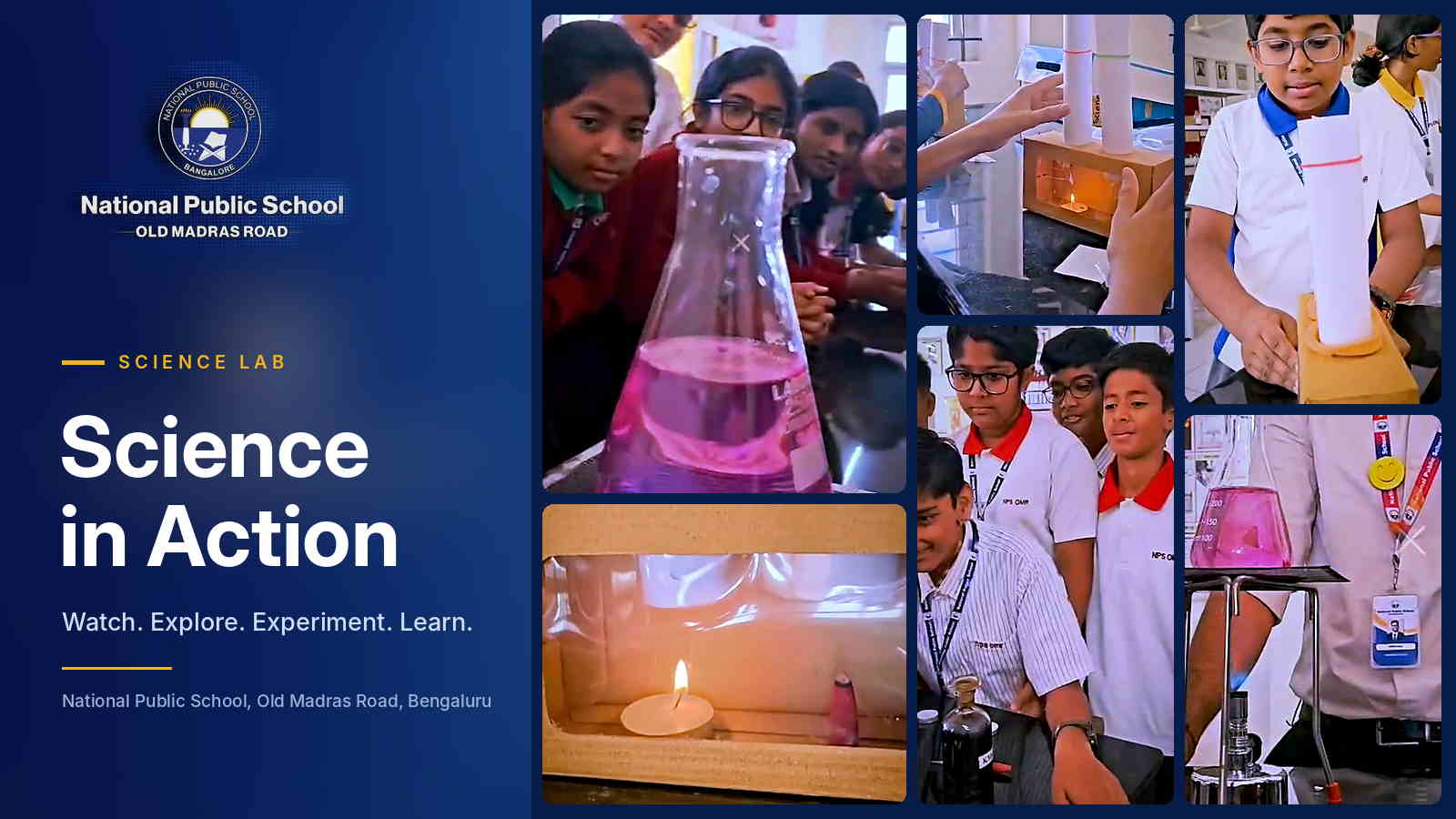
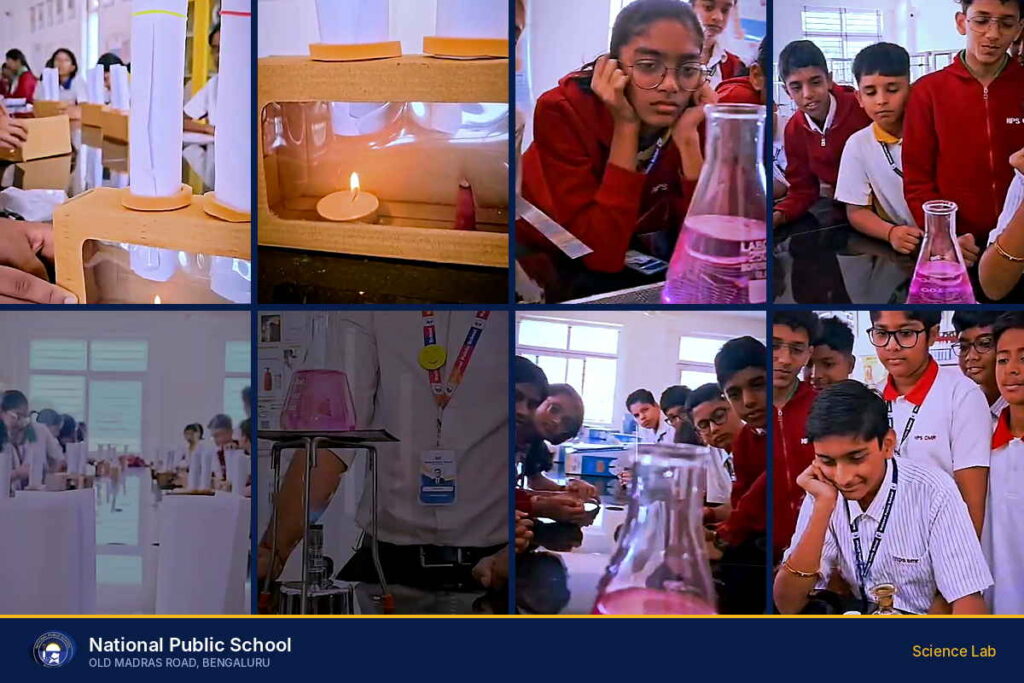
At National Public School OMR, learning goes beyond textbooks. Our students explored the fascinating concepts of heat transfer through a hands-on science experiment, discovering how heat travels through different materials and how it influences the world around us.
The activity introduced students to two important methods of heat transfer: conduction and convection, helping them connect scientific principles with everyday observations.
Conduction of Heat
Students explored conduction, the process through which heat transfers from a hotter region to a cooler one through direct contact, without the material itself moving from place to place.
Through this concept, they understood how heat travels through solids, such as a metal spoon becoming warm when placed in a hot liquid. The activity helped them recognise the role of materials in transferring heat and understand how conduction occurs in everyday situations.
Convection in Water (Liquids)
The experiment also introduced students to convection in liquids. When water is heated from the bottom, the warmer water expands, becomes less dense, and rises. Cooler, denser water moves down to take its place.
This continuous movement creates convection currents, allowing heat to circulate throughout the liquid. Students explored how this process works in familiar examples, such as boiling water in a pot or heating water in a kettle.
Convection in Air (Gases)
Taking their understanding further, students explored how heat travels through gases, particularly air.
When air gets heated, it expands, becomes less dense, and rises. Cooler, denser air moves down to replace it, creating a continuous circulation of air known as a convection current.
Students also learned how this natural phenomenon explains land and sea breezes. During the day, land heats up faster than the sea, causing the warm air above it to rise while cooler air from the sea moves towards the land. At night, the process reverses, creating a land breeze.
Learning Through Exploration
The activity encouraged students to observe, question, and understand scientific concepts through practical experiences. By exploring how heat moves through solids, liquids, and gases, they developed a clearer understanding of concepts they encounter in everyday life.
At NPS OMR, we believe meaningful learning happens when students actively engage with ideas, experiment with possibilities, and discover answers through observation.
Because science is best understood when students experience it first-hand!