
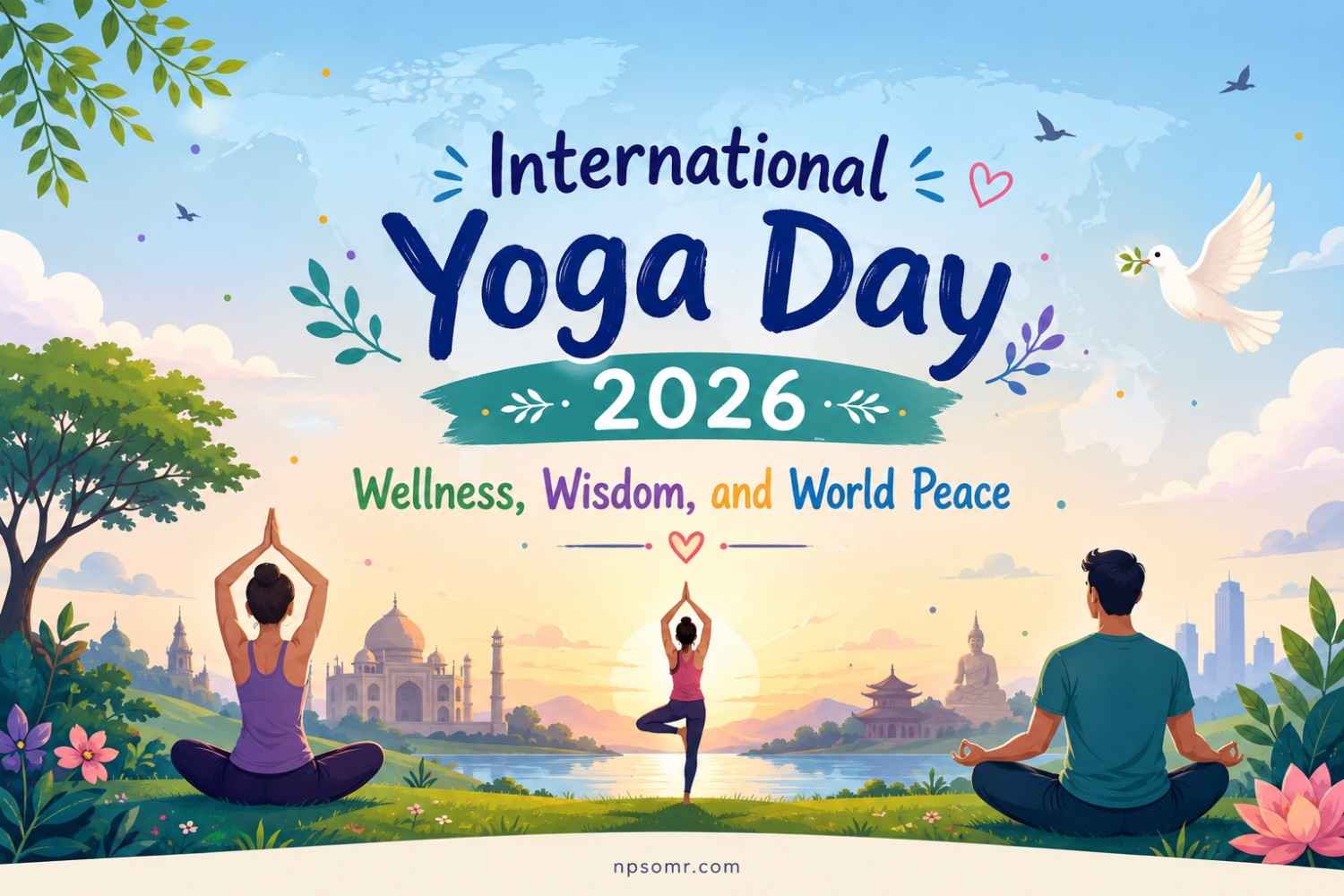
International Yoga Day 2026: Wellness, Wisdom, and World Peace
This June 21 will be celebrated as the 12th International Yoga Day. Yoga Day 2026 carries a theme that feels especially meaningful right now: “Yoga for Wellness, Wisdom, and World Peace.” Announced by India’s Ministry of Ayush, the theme speaks to three things every parent quietly hopes their child grows into: a healthy body, a steady mind, and the ability to treat others with decency.
Key Takeaways
- Yoga builds physical strength and emotional steadiness together.
- Children learn to manage big feelings through breathwork.
- Daily practice improves focus, sleep, and classroom behaviour.
- Yoga teaches empathy and reduces reactive behaviour in kids.
- Yoga Day 2026 connects personal health to collective peace.
- Even five messy minutes together count as family yoga.
- Starting young means these habits compound over a lifetime.
Yoga Day 2026 Theme
Wellness
Most parents hear “wellness” and immediately think flexibility, exercise, and posture. And, yoga does all of that. For children aged 2 to 12, whose muscles and nervous systems are still forming, consistent movement through yoga supports healthy physical development in ways that translate well beyond childhood.
But wellness in this context goes deeper. A child who has learned to notice that their shoulders are creeping toward their ears and to consciously drop them is developing body awareness that most adults have never cultivated. That sounds small. It isn’t.
Physical stress in kids frequently shows up as irritability, difficulty in concentration, or sleeplessness problems before it ever surfaces as “I feel stressed.” Yoga gives children a body language for what’s happening inside, before words are even available to them.
Wisdom
You cannot expect that most five-year-olds are not going to emerge from a yoga class quoting ancient texts. And that’s completely fine. The wisdom yoga built in young children is far more immediate and far more useful.
It looks like a seven-year-old choosing to take three breaths before responding when their sibling takes their toy. It looks like a ten-year-old who notices their own anxiety before an exam and knows what to do with it. It looks like a child who, instead of melting down at the first sign of frustration, pauses. Just for a second. But it’s enough.
That pause, that tiny space between feeling and reacting, is what yoga trains. Over months and years, it becomes something children carry with them automatically. That is the importance of yoga beyond the physical. It is cognitive and emotional development happening quietly, through movement and breath.
World Peace
We know. “World peace” as a theme can feel a bit much on a Tuesday morning when you’re trying to get everyone fed and out the door.
A child who practices yoga regularly tends to develop genuine empathy, not the taught kind, but the felt kind. They become more attuned to their own inner state, which makes it easier to recognise that inner state in others. Less reactive. More curious. Quicker to extend the benefit of the doubt.
World peace begins in the school corridor. In the lunch queue. In the choice a child makes to include someone who is sitting alone.
Why Yoga in Schools Is Worth Taking Seriously
There’s a version of this conversation that sounds like faddish wellness culture. This isn’t that.
Yoga in schools has been studied seriously for over two decades. The evidence is consistent: children who engage in regular yoga practice — even brief, age-appropriate sessions — show measurable improvements in attention, emotional regulation, and social behaviour. Teachers in schools that have integrated morning yoga routines describe classrooms that are genuinely calmer and more collaborative.
That matters enormously right now. Children today are navigating a level of ambient stress that previous generations did not. Academic pressure, social media exposure, family instability, global uncertainty — children absorb all of it, even when they can’t name it. Yoga doesn’t fix any of those things. But it builds the internal resources to cope with them.
What It Actually Looks Like in the Classroom
It doesn’t have to be a full session with mats and music, though that’s lovely when possible. Ten minutes of intentional movement and breathing at the start of the school day, done consistently, is enough to shift the room.
A simple pattern: three minutes of gentle stretching, four deep belly breaths together, one minute of sitting quietly. That’s it. Teachers who try this describe it as transformative — not because it’s magical, but because children arrive more ready to receive, think, and connect.
The importance of yoga for classroom learning lies in what it switches off as much as what it switches on. It quiets the survival-mode nervous system that makes learning nearly impossible, and opens children back up to curiosity and engagement.
Celebrating International Yoga Day 2026 at Home
This June 21 falls on a Sunday. That is genuinely useful. No school run, no rush — just a morning that belongs to your family.
You do not need experience or equipment. You need about ten minutes and a willingness to look a bit silly together, which, frankly, is one of the best things you can do with your child.
By Age Group (What Works)
Children aged 2 to 5: Keep it completely playful. You can try with the simple poses as the entry point: cobra snake, downward dog, cat-cow, frog squat. Name them dramatically. Make sounds. Let it be chaotic. The physical movement is happening whether it looks like yoga or not, and the joy of moving together is the whole point at this age.
Children aged 6 to 9: They can start to understand the breath connection. Try “balloon breath”, breathe in slowly and puff the belly out like a balloon, then breathe out and let it go flat. Three rounds of this before bed works remarkably well for children who struggle to settle. Add a few simple poses they can name and remember.
Children aged 10 to 12: Introduce box breathing properly. You can start with Inhale, hold, and exhale each for four counts. Repeat four times. This technique is used by athletes, surgeons, and military personnel to manage high-pressure situations — and it works just as well for a child sitting outside an exam hall. Teach it now, before they need it.
Practise it Beyond June 21
One International Yoga Day celebration is a lovely thing. A daily habit is a life skill.
Pick one moment in your family’s routine, it can be morning, after school, or before bed, and attach five minutes of simple movement and breath to it. Habit researchers call this “habit stacking.” You don’t have to carve out new time; you attach the new behaviour to something that already happens.
After two or three weeks, children often start initiating it themselves.
Yoga Day 2026
The 12th International Yoga Day arrives at a moment when global conversations about mental health, non-communicable diseases, and collective wellbeing feel genuinely urgent.
India’s Ministry of Ayush has this year officially launched Yoga 365 — a 100-day campaign designed to move yoga from a single annual event into a sustained daily practice for participants worldwide. New AI-assisted tools have also been developed to help practitioners check their posture via smartphone camera, making personalised guidance more accessible than ever.
Ten specially developed yoga protocols have been created for managing non-communicable diseases, including diabetes, hypertension, and obesity, underlining that yoga is increasingly understood as a preventive healthcare tool, not just a fitness class.
A Word for Parents Who Don’t Do Yoga
You might be reading this and thinking: this isn’t really for me. Fair enough.
It’s a parent who sits down on the floor with their child and tries something unfamiliar. That act of being a beginner alongside your child, of not knowing what you’re doing and doing it anyway — teaches more than any pose ever could.
Your child is watching how you handle uncertainty. How you respond to feeling clumsy or frustrated. Whether you stick with something hard, a ten-minute yoga attempt where you both wobble and laugh is a parenting moment of genuine value. It doesn’t need to look like anything.
Conclusion
Yoga has been practised for thousands of years across cultures and contexts because it keeps working. Not because it’s ancient and therefore prestigious, but because the human body and mind respond to it, reliably, generation after generation.
On this International Yoga Day, the invitation is simple: try one thing. One pose. One breath together. Leave the ambition at the door.