
India’s Forgotten Heroines: 3 Warrior Women You Should Know About
Indian history is filled with tales of bravery, resistance, and leadership—yet many of its fiercest women remain overlooked in mainstream narratives. While figures like Rani Lakshmibai of Jhansi are celebrated, numerous other warrior queens and defenders fought valiantly against colonial and oppressive forces.
For students and history enthusiasts, broadening our understanding beyond textbook heroes is essential. Today, we spotlight three remarkable women—Rani Abbakka, Kittur Chennamma, and Onake Obavva—whose courage and defiance shaped India’s resistance movements.
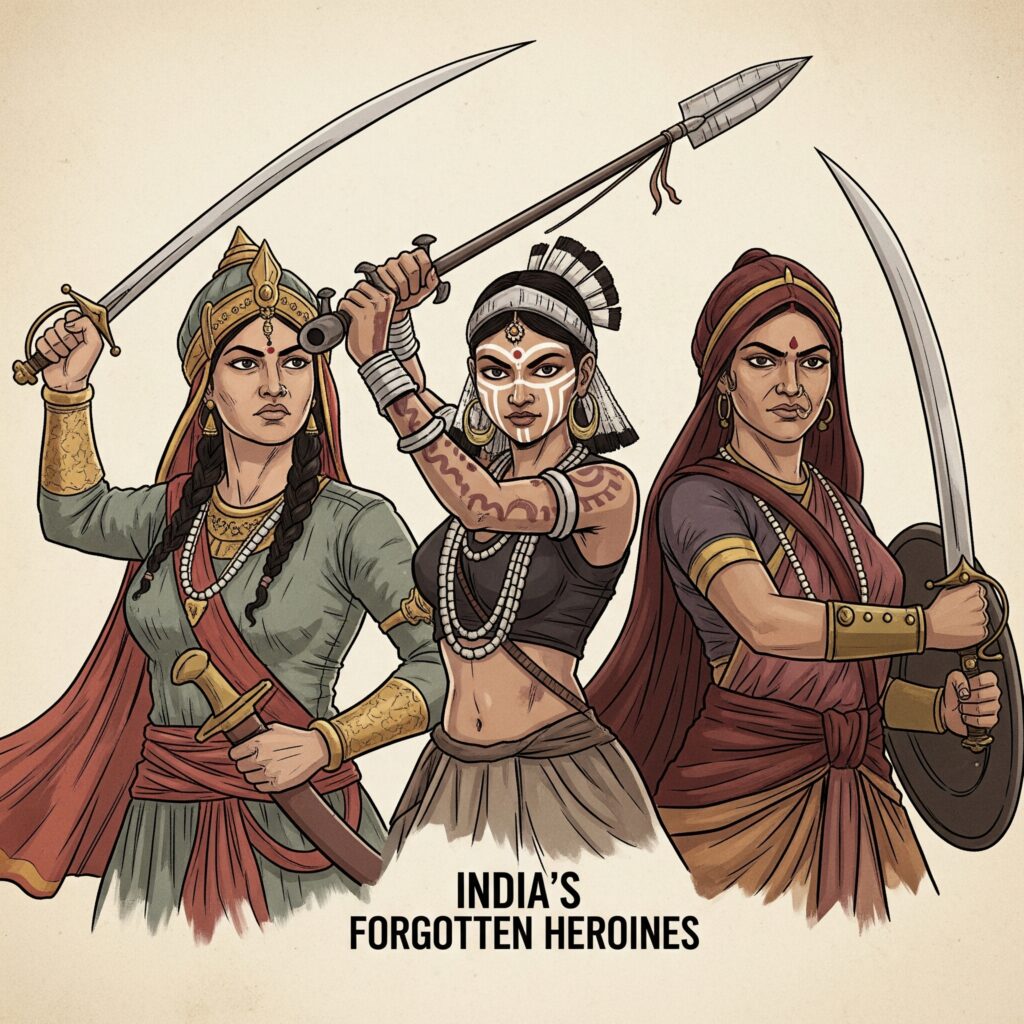 1. Rani Abbakka Chowta – The Fearless Queen of Ullal
Who Was She?
Rani Abbakka Chowta (1525–1570s) was the queen of Ullal (now in Karnataka) and ruled the Tuluva dynasty. She is celebrated as one of the first female freedom fighters against Portuguese colonial expansion in India.
Her Fight Against the Portuguese
The Portuguese, who dominated the Arabian Sea trade, repeatedly attacked Ullal to control the region. Abbakka, trained in warfare and diplomacy, led her army to resist multiple invasions.
-
In 1556, she repelled a Portuguese attack, forcing them to retreat.
-
She formed alliances with local chieftains and even used guerrilla tactics.
-
Despite being captured once, she escaped and continued fighting until her death.
Why She Matters
Abbakka’s resistance was one of the earliest and most sustained efforts against European colonialism in India. Her story is a testament to strategic warfare and regional defiance.
2. Kittur Chennamma – The Queen Who Defied the British
Who Was She?
Kittur Chennamma (1778–1829) was the queen of Kittur (Karnataka) and one of the first rulers to lead an armed rebellion against British rule, predating the 1857 revolt.
Her Rebellion Against the British
After her son’s death, the British tried to annex Kittur under the Doctrine of Lapse (a policy denying Indian rulers the right to adopt heirs). Chennamma refused to surrender.
-
In 1824, she defeated the British in her first battle, killing their collector.
-
She was eventually captured and imprisoned, where she died, but her resistance inspired future freedom fighters.
Why She Matters
Chennamma’s revolt was a precursor to India’s larger freedom struggle. She symbolizes early resistance against British policies that exploited Indian kingdoms.
3. Onake Obavva – The Lone Warrior of Chitradurga
Who Was She?
Onake Obavva (18th century) was a common woman from Chitradurga (Karnataka) who became a legend for her bravery during an enemy attack.
Her Heroic Stand
When Hyder Ali’s soldiers tried to invade Chitradurga Fort through a secret passage, Obavva—armed only with an onake (a pestle used for pounding grain)—single-handedly fought them.
-
She killed several soldiers by striking them down one by one as they entered.
-
Her vigilance delayed the invasion until reinforcements arrived.
Why She Matters
Obavva’s story is a reminder that courage isn’t limited to kings and queens. Ordinary people, too, have shaped history through sheer bravery.
Why These Stories Matter for Students
-
Beyond Textbooks – Many regional heroes are ignored in standard curricula. Learning about them gives a fuller picture of India’s resistance history.
-
Inspiration – These women broke gender norms and fought against impossible odds, proving leadership isn’t bound by gender.
-
Cultural Pride – Their stories connect us to India’s diverse regional histories and unsung struggles.
How to Learn More?
-
Visit Kittur Fort, Ullal, or Chitradurga Fort to see their legacies firsthand.
-
Read regional histories and folk ballads that preserve their memories.
Final Thought: History isn’t just about the famous—it’s also about those who fought in the shadows. Rani Abbakka, Kittur Chennamma, and Onake Obavva deserve recognition for their extraordinary contributions. Who else do you think should be remembered? Share your thoughts!