
How School Competitions and the House System Build Character
School days are often measured by bells, subject periods, and examinations. Between those rigid blocks of time, an entirely different kind of education happens. Incorporating structured activities like ICC and IHC in schools provides an essential framework for personal growth. These platforms give young minds a chance to test their abilities in a safe, familiar environment. When exploring the vibrant campus life at NPS OMR, it becomes clear that these events are foundational to development. They offer a lively arena where lifelong skills take root naturally.
Key Takeaways
- Competitions spark creative problem-solving.
- House events foster deep belonging.
- Students learn resilience through participation.
- Leadership emerges in collaborative spaces.
- Healthy rivalry builds lasting friendships.
Laying the Groundwork with ICC and IHC in Schools
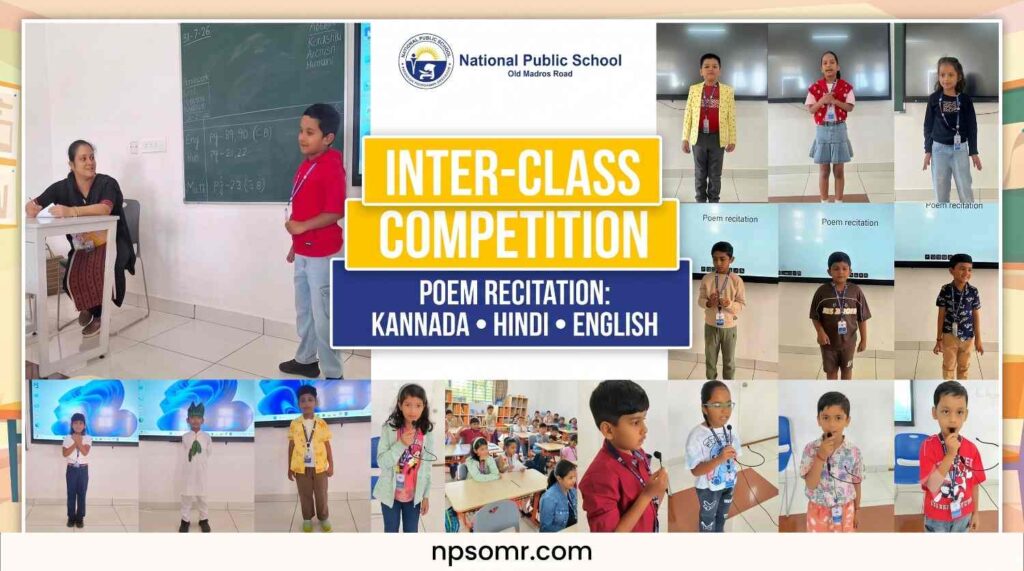
Building confidence starts early and requires consistent practice. Inter-Class Competitions (ICC) introduce young learners to the stage, helping them find their voice. First graders step up to participate in Poetry Recitation in their second language, learning the rhythms of English, Hindi, or Kannada. Second graders take on the Self & Family Introduction event, presenting personal narratives to their peers.
These specific moments teach young children to stand tall, modulate their voices, and articulate their thoughts clearly. As they progress to Grades 3 and 4, the challenges grow into Story Narration and Pick and Speak events. The judging criteria for these events rigorously evaluate memory, fluency, and overall presentation. Every time a student steps up to speak, they conquer a small piece of stage fright, paving the way for bolder communication down the line.
The Transformative Benefits of Competitions in Schools
A large campus can sometimes feel overwhelming. A house system solves this by creating tight-knit micro-communities. Students rally under distinct banners, finding immediate camaraderie and shared purpose.
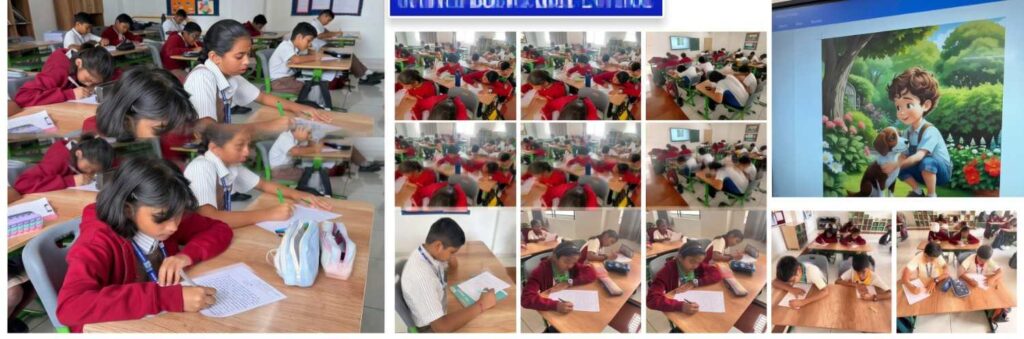
The school laid out detailed plans for older students. This framework introduces vibrant writing challenges for Grades 5 through 8 on 31st July 2026. Grade 5 students tackle Picture Story Writing, pushing their imagination to craft narratives from visual prompts. Grade 6 students focus on Dialogue Writing, bringing specific situations to life through realistic conversation.
For Grades 7 and 8, the Advertisement Leaflet competition pushes participants to combine language skills with visual appeal and persuasive messaging. The benefits of the house system in schools become glaringly obvious here. Students are judged on relevance, grammar, structure, and sheer creativity. They collaborate, brainstorm, and refine their ideas to earn points for their respective houses. This dynamic environment encourages them to take creative risks they might avoid in a standard classroom setting.
Fostering Leadership Skills Through the House System
Leadership is entirely practical. You have to experience it to understand it. The annual Investiture Ceremony formally recognizes the Student Council, presenting newly elected School Captains, House Captains, and Vice Captains with their badges and sashes. Taking the oath of office in front of peers instills a profound sense of responsibility.
Developing leadership skills through house system activities requires students to manage group dynamics, mediate disagreements, and motivate their teammates. A House Captain learns to organize strategies for upcoming competitions while ensuring every member feels valued. They become the crucial link between the teaching staff and the student body, guiding younger peers with integrity and perseverance.
A Closer Look at How the House System Builds Character
Character emerges naturally from facing mild adversity and working alongside diverse peers. Whether a student is drafting an engaging dialogue for an inter-house writing event or defending the goalpost during a crucial football match, they are constantly stepping outside their comfort zones.
Understanding exactly how the house system builds character requires looking at the continuous thread of identity it provides. From early primary years through graduation, students belong to a consistent group. They learn to support friends during poetry recitations, collaborate on visually appealing promotional leaflets, and cheer until their voices go hoarse on the sports field. They discover their hidden talents and learn to appreciate the unique strengths of their classmates.
Reading about these developmental milestones is one thing, but witnessing the energy of a collaborative learning space brings the entire experience to life. We warmly invite you to walk the corridors, observe the daily interactions, and feel the vibrant community spirit firsthand. Schedule a campus tour at National Public School OMR today and explore the exact environment where young minds find their voice and thrive.
FAQs
What is the primary difference between ICC and IHC in schools?
Inter-Class Competitions (ICC) involve students from the same grade level testing their abilities against one another, such as second-language pick-and-speak events. Inter-House Competitions (IHC) group students vertically across different grades into distinct teams, encouraging broader collaboration and school-wide camaraderie.
What are the practical benefits of a house system in schools for younger children?
Younger students gain immediate access to a supportive micro-community within a large campus. This structure provides them with older role models to look up to. It also creates a safe space to participate in early creative events like drawing and coloring, establishing fundamental confidence.
How do these structured events impact daily academics?
Preparation for these activities demands intense focus, memorization, and careful time management. Learning to balance an inter-house picture story writing challenge or daily sports practice naturally translates into stronger, more disciplined classroom study habits.
Does developing leadership skills through house system activities require my child to be outgoing?
Leadership materializes in many different ways. A quiet student might naturally excel at strategizing the layout for a Grade 7 advertisement leaflet competition or organizing behind-the-scenes event logistics. Effective guidance relies heavily on personal responsibility, deep focus, and strategic collaboration rather than sheer vocal presence.
How exactly do educators build teamwork and sportsmanship in schools?
Physical education and team events offer immediate, undeniable feedback on group effort. Schools use platforms like competitive inter-house football tournaments to teach practical resilience. These matches push participants to celebrate their victories graciously and process their defeats constructively, forging strong peer bonds in the process.