
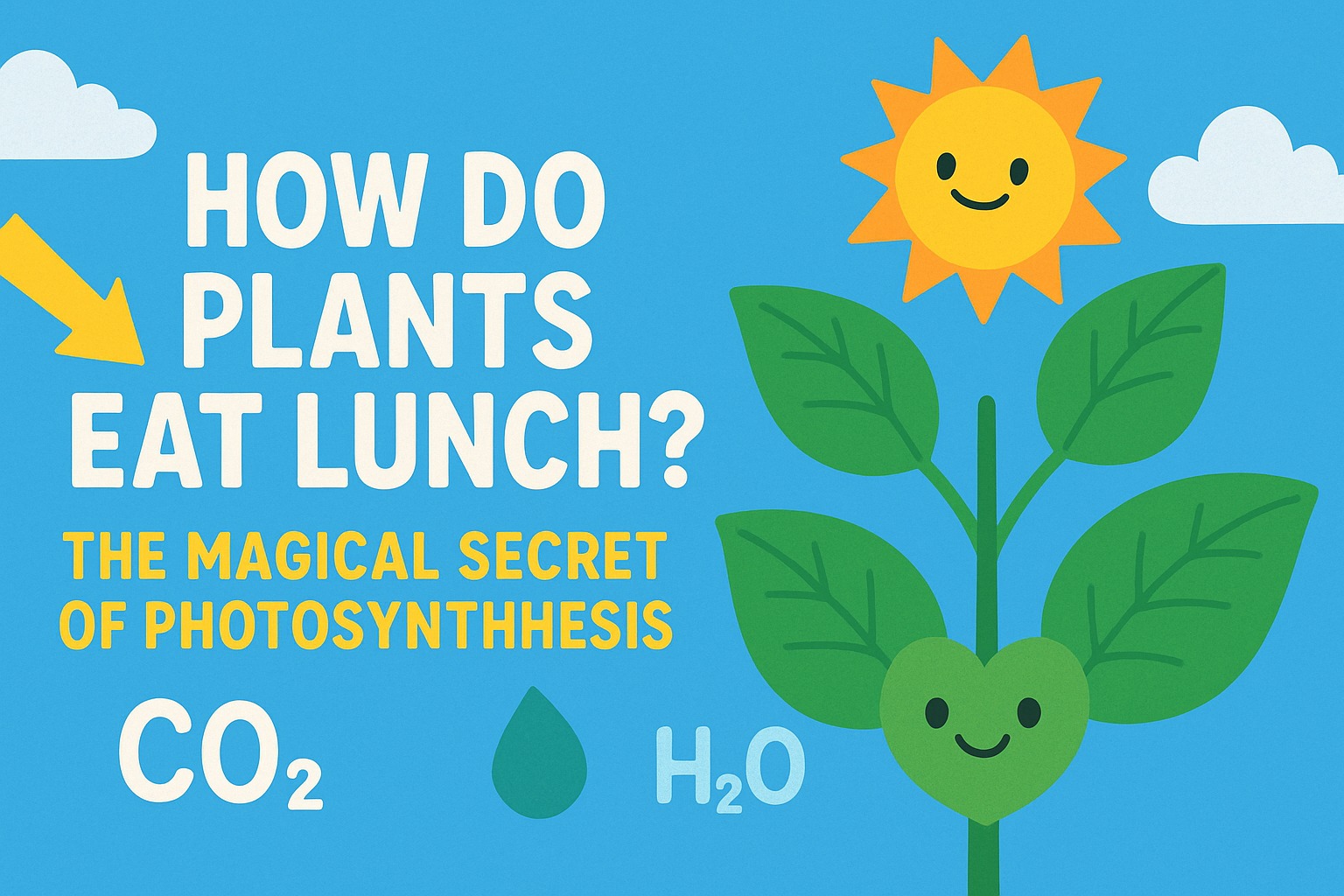
How Do Plants Eat Lunch? The Magical Secret of Photosynthesis
Have you ever looked at a tree or a tiny green plant and wondered — “What do they eat?” After all, they don’t have mouths, spoons, or lunchboxes like we do. Yet, every leaf you see is busy preparing a fresh meal every single day. The secret lies in a beautiful natural process called photosynthesis — the way plants make their own food using sunlight, air, and water.
Let’s peek into the plant’s “kitchen” and see how it all happens.
The Sun: The Chef’s Lamp
Imagine a plant as a little chef wearing a green apron. Every morning, it wakes up and looks toward the sun. The sunlight is like its kitchen light — without it, cooking can’t begin.
Plants have a green pigment called chlorophyll (found in their leaves) that acts like a solar panel. It captures sunlight and turns it into energy that the plant can use to cook its meal. This is why leaves are green — they’re full of chlorophyll, the magical ingredient that absorbs the sun’s rays.
The Ingredients: Water and Carbon Dioxide
No meal is complete without ingredients. For plants, the main ingredients are water (H₂O) and carbon dioxide (CO₂).
- Water comes from the soil. The roots act like straws, sipping up water and minerals from the ground.
- Carbon dioxide comes from the air. Plants “breathe” it in through tiny pores on their leaves called stomata.
So now, the plant has sunlight for energy, water from the roots, and carbon dioxide from the air — all ready to start the cooking process!
The Kitchen Magic: Photosynthesis in Action
Here’s where the real magic begins. Inside the leaf, sunlight energy helps mix water and carbon dioxide to create glucose, a type of sugar that becomes the plant’s food.
The formula looks like this:
Carbon dioxide + Water + Sunlight → Glucose + Oxygen
In simpler terms: the plant uses sunlight to turn air and water into food and releases oxygen as a thank-you gift to the world.
So while plants are “eating lunch,” they’re also giving us the oxygen we breathe. Talk about sharing your meal!
The Plant’s Storage Room: Saving for Later
Plants don’t eat all their food at once. The glucose they create is either used right away for energy or stored in their roots, stems, fruits, and seeds.
That’s why we get sweet fruits, juicy vegetables, and energy-packed grains — they’re basically the plant’s stored food. When you eat a mango or a potato, you’re enjoying the meal a plant cooked for itself using sunlight.
Why Photosynthesis Matters
Photosynthesis isn’t just about feeding plants. It’s the foundation of life on Earth. Every bite of food you eat, directly or indirectly, traces back to this green kitchen magic.
- It gives oxygen for animals and humans to breathe.
- It provides food that fuels all living beings.
- It keeps the Earth’s air balanced, taking in carbon dioxide and releasing oxygen.
Without photosynthesis, the planet would be dark, airless, and lifeless.
A Fresh Way to Think About It
Next time you see a leaf fluttering in the sunlight, think of it as a tiny chef busy cooking lunch. With sunlight as its stove, water as its soup, and air as its seasoning, it’s quietly preparing food for itself — and, in a way, for all of us.
So yes, plants eat lunch — but in the most magical, invisible way imaginable.
In short:
Plants make their own food through photosynthesis, a natural process that turns sunlight, water, and carbon dioxide into energy and oxygen. It’s nature’s most efficient kitchen — always open, always green, and always giving.