
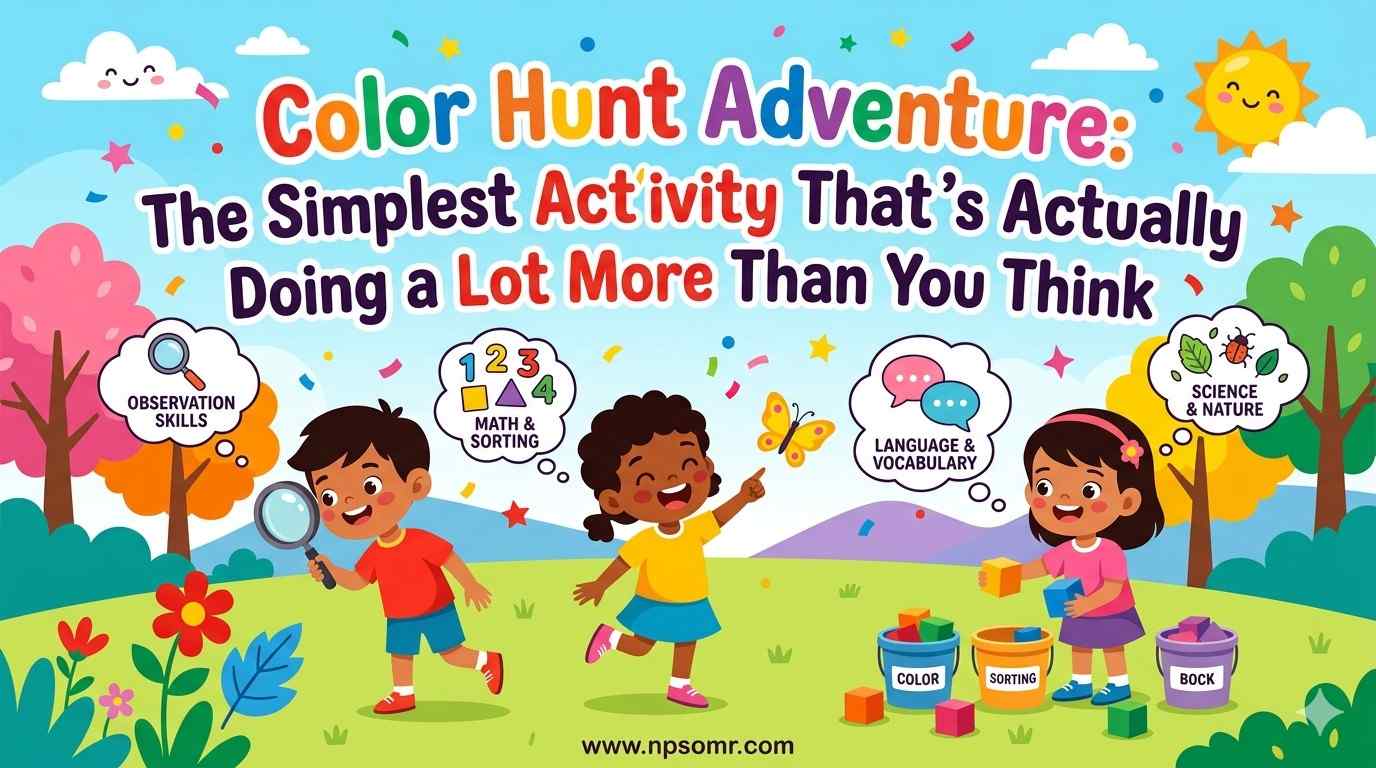
Color Hunt Adventure: The Simplest Activity That’s Actually Doing a Lot More Than You Think
You’ve probably handed a child a crayon and watched them stare at it for a full minute before doing anything. Not because they’re confused. Because they’re looking at it. Really looking. The way kids do when something catches them before the adult world rushes them past it.
That’s the instinct a color hunt taps into. And once you see what it actually does for a child’s developing brain, you’ll wonder why it isn’t talked about more.
What a Color Hunt Actually Is (And Isn’t)
A color hunt is not a craft. It’s not a lesson. You pick a color — orange, say — and the child goes around finding things that match. That’s genuinely it.
What makes it work isn’t the concept. It’s what happens inside the child while they’re doing it. They’re scanning. Comparing. Rejecting and selecting. Making dozens of micro-decisions in a span of minutes. That’s cognitive load in the best possible sense — the kind that builds focus without the child ever knowing they’re being challenged.
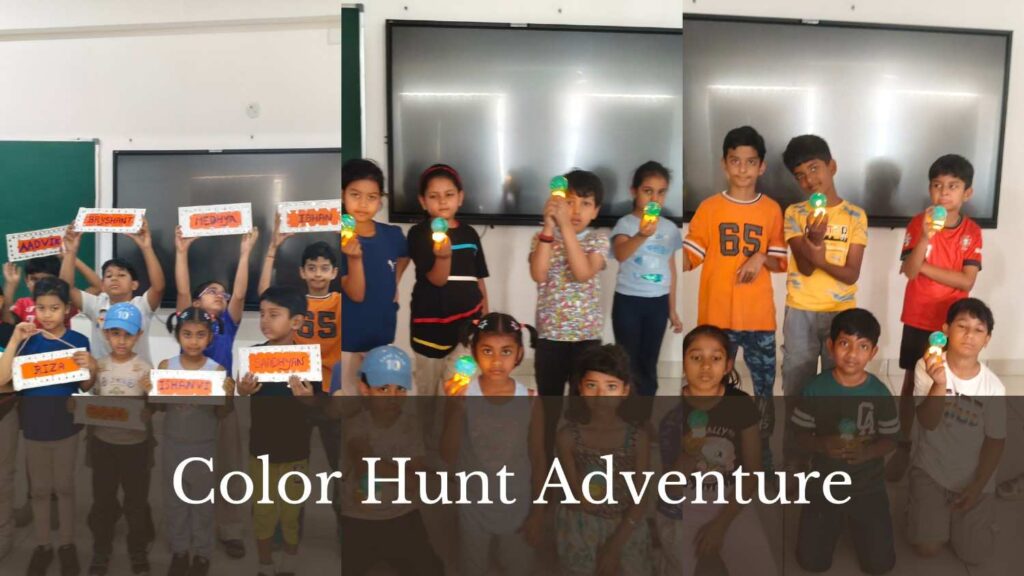
The LEGO Foundation, which has studied play-based learning extensively, notes that activities like color hunts engage children’s thinking and ability to stay focused even when things get tricky, and this is important. Because the child will hit a moment where they can’t find anything green, and they have to keep going anyway. That’s perseverance. Dressed up as a game.
The Skills Parents Don’t Realize They’re Building
Attention That Actually Transfers
Here’s something teachers notice but rarely say out loud: the children who are good at paying attention in class are usually the ones who’ve had practice paying attention to small things at home. Noticing. Sitting with something. Looking at it more than once.
Color hunt activities do exactly that. A child hunting for blue isn’t skimming — they’re examining. The sky, the tablecloth, the corner of a book spine. That habit of careful looking doesn’t stay in the living room. It follows them.
Language That Grows Sideways
Nobody sits a four-year-old down and teaches them the word “crimson.” But if they bring you a dark red mug during a color hunt and you say, “Oh, interesting — that’s almost crimson, isn’t it? Darker than fire-truck red” — they’ve just learned it. Without a lesson. Without a worksheet.
This is how vocabulary actually expands in young children, not through drills. Through moments where a real word solves a real problem they’re experiencing in the moment. Color hunt activities create those moments constantly, if adults are paying attention to the conversation side of the game.
Early Math Thinking — Without the Math Anxiety
Sorting is one of the first mathematical concepts children encounter. Grouping by color, then by size, then asking which group has more — that’s classification, comparison, and early number sense all wrapped together.
Children who’ve done color hunt activities regularly tend to find these concepts more intuitive when they show up formally in school. Not because they memorized anything. Because they’ve already done the thinking, physically, with their hands.
Running a Color Hunt: What Actually Works
Forget elaborate setups. Here’s what experienced educators and parents consistently find works best:
One color at a time. Especially under age 5. Giving a young child three colors to hunt simultaneously splits their attention and reduces the satisfaction of success. One color, one hunt, full focus.
Give them something to collect. A paper bag. A shoebox. A kitchen bowl. The physical act of gathering adds a sensory layer that deepens how children remember and process what they’ve found. It also makes the end of the hunt feel like an arrival — something to look at and talk about together.
Don’t correct too fast. If a child brings you something that’s sort of the right color but not quite — hold on before redirecting. Ask them and try to know why they picked it. Their reasoning often reveals more about their thinking than the answer itself.
The conversation after is where the learning lives. “Which one is your favorite?” “Is this one the same red as that one?” “What’s the most surprising thing you found?” A few minutes of that talk does more for language development than the hunt itself.
Adjusting for Different Ages
Ages 2 to 4 — Keep It Joyful and Loose
Primary colors only. The goal beyond the accuracy is more about engagement. A toddler who brings you a pink sock when you said red is not getting it wrong. They’re participating, and that matters far more right now. Celebrate the attempt. Gently name what they found. Move on.
Ages 5 to 8 — Layer In the Thinking
Now you can introduce shade comparisons. Can they find three different yellows and arrange them from lightest to darkest? Can they find something inside the house that matches a color they spotted outside? These small additions push critical thinking without removing the playfulness that makes the activity worth doing in the first place.
Ages 9 to 12 — Hand Them Some Ownership
Older children often disengage from activities that feel “babyish.” Reframe it. Give them a phone and let them photograph their color hunt rather than collect physically. Or challenge them to find ten shades of one color and explain the difference between each. Some children this age will turn it into a creative project entirely on their own — a collage, a color story, a visual essay. Let them.
Why This Works in Schools, Not Just at Home
Educators who bring color hunt activities into early childhood classrooms consistently report two things. First, it levels the playing field. Children who struggle with reading or numeracy often shine during a color hunt — they notice things others miss, they come back with surprising finds, and that visible success changes how they carry themselves for the rest of the day.
Second, it builds community. When a group of children goes on a color hunt together and compares what they found, disagreements happen naturally — “That’s not really orange” — and so do negotiation, perspective-taking, and collaborative thinking. All of that from a game that takes ten minutes and costs nothing.
Making It Stick Over Time
The families and classrooms that see the biggest impact from color hunt activities aren’t doing anything dramatic. They’re just doing it regularly. A quick color hunt before dinner. One during a waiting room visit. A five-minute version on the walk to school.
Children who have these small moments of careful observation woven into their week build something that’s hard to name but easy to recognize: they become people who notice things. Who looks closely. Those who are curious about the ordinary world around them.
That’s not a small thing to give a child.
Conclusion
Color hunt is one of those rare activities that looks simple from the outside and delivers something genuinely meaningful underneath. The child thinks they’re playing. And they are. But they’re also learning to focus, to describe, to sort, to persist, and to find something worth noticing in an ordinary room.
Start this week. Pick a color. See where they go.